
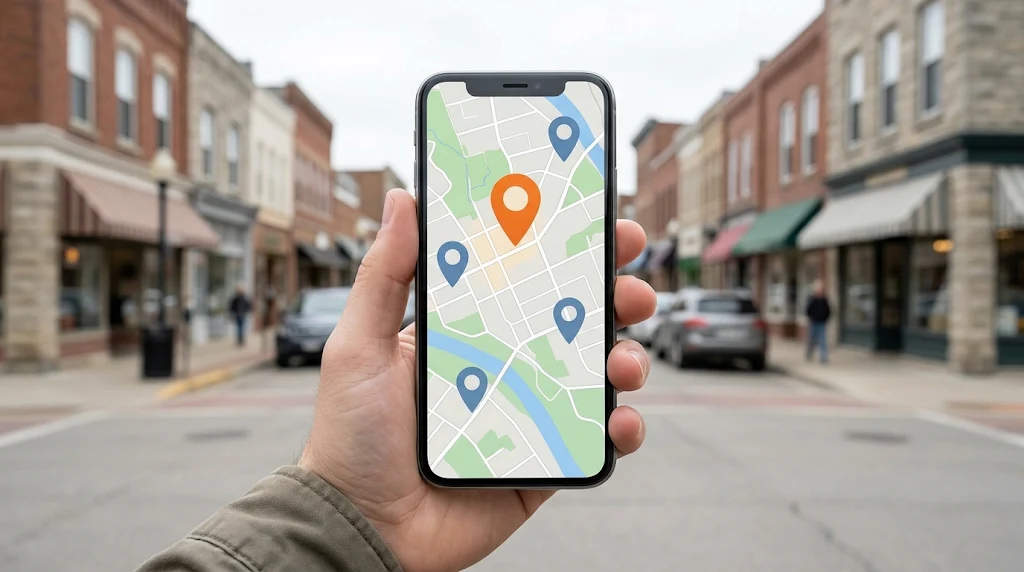
For sure you’ve done this. You search for your own service, in your own area, the way a customer would. The map comes up, and there they are: a few other businesses sitting above you. You know most of them. You’ve seen their work, you know it isn’t better than yours, and your reviews say so too.
It’s frustrating to see them above you, and it rarely has anything to do with who does the better job. Google can only rank what it can see, and where you appear on the map depends far more on what Google knows about your business than on the quality of your work. That isn’t your fault, and in most cases it can be put right.
What Google says it looks at
Google’s own help page on local ranking says local results are based mainly on three things: relevance, distance and prominence. In plain English:
- Relevance is how well your listing matches what the person typed. If someone searches for a service you offer but your profile never mentions it, Google has very little reason to show you for that search.
- Distance is how far your business is from the person searching. Nobody can change that. (Note: over time it is possible to expand your area of influence).
- Prominence is how well known your business is in the digital world where Google lives. Google says more reviews and good ratings help, and so does where your website comes up in ordinary Google searches. Other things have an influence, like which directories your business is listed in and whether your business information is consistent everywhere it appears.
Google also says that complete, detailed information on your profile helps it match you to the right searches. That one sentence explains a lot of what we see on the map.
Behind those three are more than 180 smaller things
Those three are the big picture. Underneath them, Google weighs more than 180 different factors when it decides where a business appears in the Maps results.
They don’t all count the same. A handful make a real difference, and a lot of them only nudge things a little. So we work on the factors with the most impact first, especially in the early months. Then, over time, every small thing that can improve your position gets built in as well. None of it is a secret. It’s basically a lot of steady, careful work.
The parts you can actually do something about
You can’t control where someone is when they search. Most of the rest isn’t so hard to fix. These are the things that usually make the biggest difference:
- Your main category. It’s the most important single choice on your profile. If it’s wrong, or too general, you can be left out of searches you should be in.
- Every part of your profile filled in. Your services, your opening hours (holiday hours included), your description and anything else Google gives you room for.
- Reviews. A steady flow of genuine ones, each answered promptly and individually, not with the same copy-and-paste reply every time.
- Your details matching everywhere. Your business name, address and phone number should be written exactly the same wherever they appear online, because Google trusts details that agree. You’d be amazed how many businesses get this wrong.
- Your website. It should tell the same story as your profile. And because Google counts where you come up in ordinary search results, a website nobody can find holds your map listing back as well.
Why the bigger firm is often ahead
More often than not, it’s not because their work is better. They’ve usually been at it longer, they’ve built up more reviews, they’ve filled in more of their profile, or, most likely, someone has been looking after it for them.
In other words, the difference is usually the time spent on their listing, not the quality of the work they do. That’s actually good news because you can still do something about it.
What doesn’t work
Be wary of anyone who promises you the top spot on the map. Nobody controls Google’s results, and anyone who says otherwise is selling you something they can’t deliver.
The same goes for review shortcuts. Offering something in return for a review, sending happy customers to Google and unhappy ones somewhere else, or telling people what to write all go against Google’s rules, and reviews gathered that way can be taken down.
Posting on your profile regularly is worth doing when you really have something to say, because it gives people a reason to call. On its own, though, automated weekly posting won’t push you up the map.
None of this happens overnight. Getting a business noticed on the map is a long-term job, and it’s the steady work that lasts. You could do all of it yourself if you had the time to learn about it, stay up to date with what changes and to implement everything on a consistent regular basis.
If you’d like to look at how we can help, our GBP management page explains more about what we can do for you, from the first check of your profile to the work we carry out every month. And if you’d like to chat about your particular situation, you’re very welcome to get in touch without any obligation.